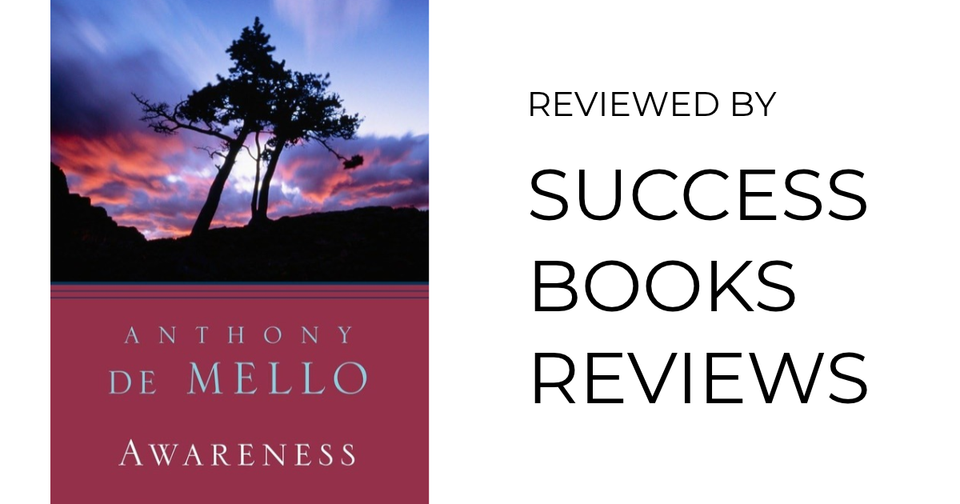
Awareness - Anthony de Mello (Review)
Summary
In Awareness, Jesuit priest and spiritual teacher Anthony de Mello argues that much of ordinary life is lived in a kind of psychological sleep. We react automatically to conditioning, labels, expectations, fears, attachments, and other people’s opinions, rarely noticing how strongly these shape what we experience.
De Mello’s central invitation is simple but demanding: wake up and see clearly. Rather than immediately trying to change ourselves or the world, he emphasizes observing thoughts, emotions, reactions, and attachments without judgment. Awareness itself begins to reveal how much suffering is created by identification with these patterns.
The book draws freely from Christian spirituality, Buddhism, Hindu traditions, psychology, and stories from different cultures. Its concern is less with establishing a religious doctrine than with direct seeing: recognizing what is actually happening before habitual interpretation takes over.
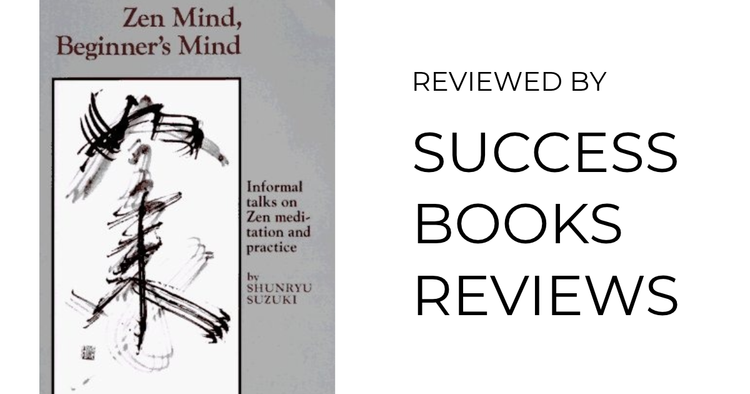
Readers interested in loosening identification with thought may also enjoy our review of The Power of Now, while Zen Mind, Beginner’s Mind offers a closely related emphasis on direct experience, non-grasping, and awareness without turning spiritual practice into another achievement project.
Who This Book Is For
- Readers interested in awareness, self-inquiry, and contemplative spirituality
- Anyone noticing how strongly reactions and conditioning shape everyday experience
- Readers questioning attachment, approval-seeking, and psychological dependence
- Those interested in the relationship between thought, emotion, and identity
- Readers drawn to nondual perspectives without requiring a formal philosophical system
- Anyone seeking a bridge between Christian spirituality and Eastern contemplative traditions
Key Takeaways
- Awareness comes before change: Seeing a reaction clearly may be more transformative than immediately trying to fix it.
- Feelings are not the self: Emotions and reactions arise within experience, but they do not need to define who we are.
- Labels filter reality: Once something is named and judged, we may begin responding more to our interpretation than to what is actually present.
- Attachment creates dependence: When happiness depends on particular people, outcomes, status, or approval, fear of losing them follows closely behind.
- Conditioning operates automatically: Many preferences, fears, and assumptions have been learned rather than consciously chosen.
- Observation need not involve condemnation: Awareness becomes clearer when experience is noticed without immediately classifying it as good or bad.
- Happiness is not necessarily produced by circumstances: De Mello repeatedly questions the belief that fulfillment must come from changing the external world.
- Waking up changes relationships: Seeing others with fewer projections and demands can create greater freedom for both people.
- Direct experience precedes interpretation: Much of the book points toward encountering reality before habitual thought turns it into a story about ourselves.
Strengths
- Direct, provocative, and unusually readable
- Connects psychological observation with contemplative insight
- Challenges attachment, approval-seeking, and habitual identification with emotion
- Encourages observation rather than another program of self-improvement
- Draws useful parallels across several spiritual traditions
- Particularly strong on the difference between experience and our interpretation of experience
- Conversational style makes difficult ideas accessible
- Provides a natural bridge between psychology, spirituality, and nondual inquiry
Weaknesses
- The conversational origin of the material can make the book repetitive
- De Mello moves freely between religious traditions without always exploring their differences in depth
- Some statements are deliberately provocative and can sound overly absolute when separated from the broader argument
- Readers seeking a systematic method or carefully structured philosophy may find the presentation loose
- Psychological observations are often offered as experiential insights rather than developed through detailed research
- The uncompromising treatment of attachment may initially feel severe, particularly when applied to close relationships
Verdict
Awareness is less a conventional self-help book than an invitation to examine the machinery through which the self usually experiences the world.
De Mello repeatedly directs attention toward reactions that normally operate unnoticed: the desire for approval, resistance to unpleasant feelings, attachment to outcomes, judgments about other people, and the tendency to turn every experience into a story about “me.”
His proposed response is not greater self-control. It is awareness.
That distinction gives the book particular relevance to the idea of success. Much success literature assumes that the central task is to improve the individual - becoming more confident, productive, disciplined, admired, or secure. De Mello asks a more unsettling question: what if many of the needs driving that project arise from conditioning and identification in the first place?
This does not require abandoning goals, relationships, work, or achievement. It means becoming more aware of whether we are engaging with them freely or using them to construct and defend an identity.
The book also sits naturally alongside modern nondual writing. Feelings arise, thoughts arise, judgments arise - but de Mello repeatedly asks the reader not to confuse these passing experiences with the deeper fact of awareness itself. Change then becomes less a matter of forcing the personality into a preferred shape and more a consequence of seeing clearly.
At times the book is repetitive and intentionally confrontational, but that directness is also part of its effectiveness. De Mello is not particularly interested in helping readers acquire another attractive spiritual theory.
He wants them to wake up.
Rating: ★★★★★ (5/5)
Where to Get It
This book is widely available through major online and local booksellers, including Amazon and independent retailers.