Zhuangzi: Basic Writings - Zhuangzi, translated by Burton Watson (Review)
Summary
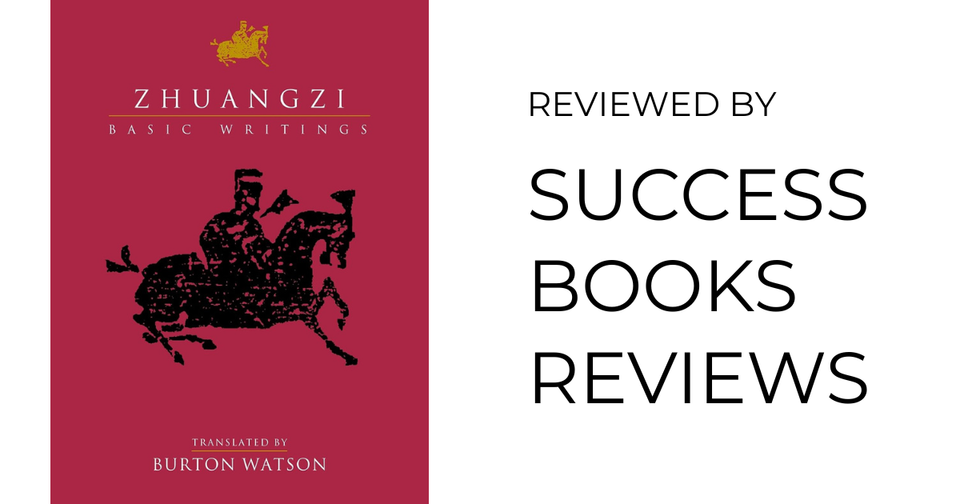
Zhuangzi: Basic Writings presents one of the great works of classical Chinese philosophy in Burton Watson’s highly readable translation. Through stories, paradoxes, humor, and shifts in perspective, Zhuangzi challenges our confidence in fixed distinctions - success and failure, useful and useless, right and wrong, self and other, life and death.
Where the Tao Te Ching often expresses its insights in compressed verses, Zhuangzi explores similar territory through memorable stories: a cook whose knife moves effortlessly through an ox, a tree spared because it is considered useless, and a man uncertain whether he dreamed of being a butterfly or is now a butterfly dreaming of being a man.
Again and again, the book suggests that greater freedom becomes possible when we stop insisting that reality conform to fixed judgments and identities. Rather than imposing ourselves on circumstances, Zhuangzi points towards responsiveness, spontaneity, and moving with change.
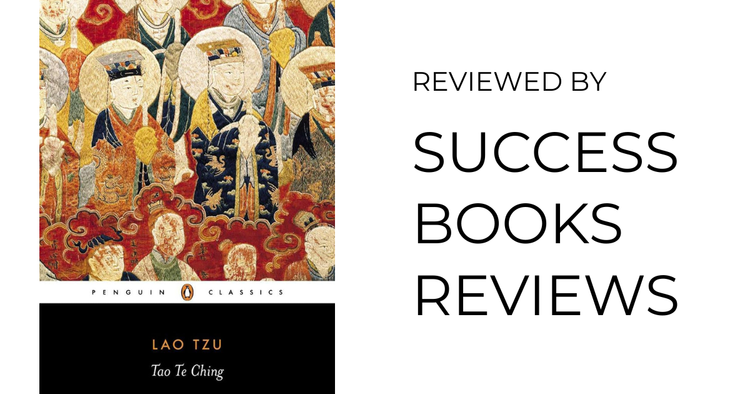
Readers who enjoyed our review of the Tao Te Ching will find a closely related but more playful expression of Daoist thought here, while The Power of Now provides a modern parallel in its questioning of identification with thought and the conceptualized sense of self.
Who This Book Is For
- Readers interested in Taoism, philosophy, and contemplative traditions
- Anyone questioning rigid ideas about success, usefulness, or identity
- Readers drawn to spontaneity, non-striving, and direct experience
- Those interested in how perspective shapes our experience of reality
- Readers who enjoyed the Tao Te Ching but would like similar themes explored through stories and humor
Key Takeaways
- Our distinctions are not absolute: Ideas such as useful and useless, success and failure, or right and wrong depend heavily on perspective and circumstance.
- Fixed viewpoints restrict us: Strong identification with one interpretation of reality can make it harder to respond freely when circumstances change.
- Skill can become effortless: The story of Cook Ding suggests that mastery can move beyond conscious force into natural, responsive action.
- Usefulness can become a trap: What appears useless by conventional standards may possess freedoms unavailable to what society values.
- Identity is less fixed than it appears: Zhuangzi repeatedly unsettles the assumption that the self is a stable and independent entity.
- Non-striving does not mean inactivity: Effective action can arise through responsiveness rather than forceful control.
- Certainty deserves suspicion: Zhuangzi continually asks how we know that our own perspective is the final or correct one.
Strengths
- One of the most imaginative and entertaining works of classical philosophy
- Uses humor and paradox to loosen rigid patterns of thought
- Offers a powerful counterpoint to achievement-oriented ideas of success
- Particularly strong on perspective, identity, adaptability, and non-striving
- Provides an important expansion of themes introduced by the Tao Te Ching
- Burton Watson’s translation is clear and accessible
- Rewards rereading because its stories resist being reduced to a single fixed meaning
Weaknesses
- Readers expecting a clear argument or step-by-step philosophy may find the structure elusive
- Paradox and humor can make some passages difficult to interpret
- Modern readers can easily impose later psychological or non-dual terminology onto the text
- Basic Writings is a selection rather than the complete Zhuangzi
- The text deliberately resists firm conclusions, which may frustrate readers looking for definite answers
Verdict
Zhuangzi: Basic Writings is an extraordinary exploration of what becomes possible when our usual categories and certainties begin to loosen.
Rather than offering a better system for controlling life, Zhuangzi questions the assumptions behind our attempts at control: that our perspective is complete, that usefulness is always preferable to uselessness, that success and failure have fixed meanings, and that the person trying to manage life is itself as solid and separate as it appears.
The story of Cook Ding offers one of the clearest alternatives. Mastery is no longer greater force or more intense effort. Action becomes responsive and uncontrived, following the natural openings already present in the situation.
This makes the book a striking counterpoint to conventional success literature. Instead of asking only how to achieve our goals more effectively, Zhuangzi asks whether the goals, identities, and standards by which we measure achievement may themselves deserve examination.
Readers approaching the text from a modern contemplative or non-dual perspective will find many resonances, particularly in its questioning of fixed identity and conceptual division. But Zhuangzi is best allowed to retain his own distinctive Daoist voice.
Playful, unsettling, and unusually liberating, Zhuangzi invites us to discover how much freer experience can become when we no longer need every distinction to be final.
Rating: ★★★★★ (5/5)
Where to Get It
This book is widely available through major online and local booksellers, including Amazon and independent retailers.