The Psychology of Stupidity - Jean-François Marmion (ed.) (Review)
Summary
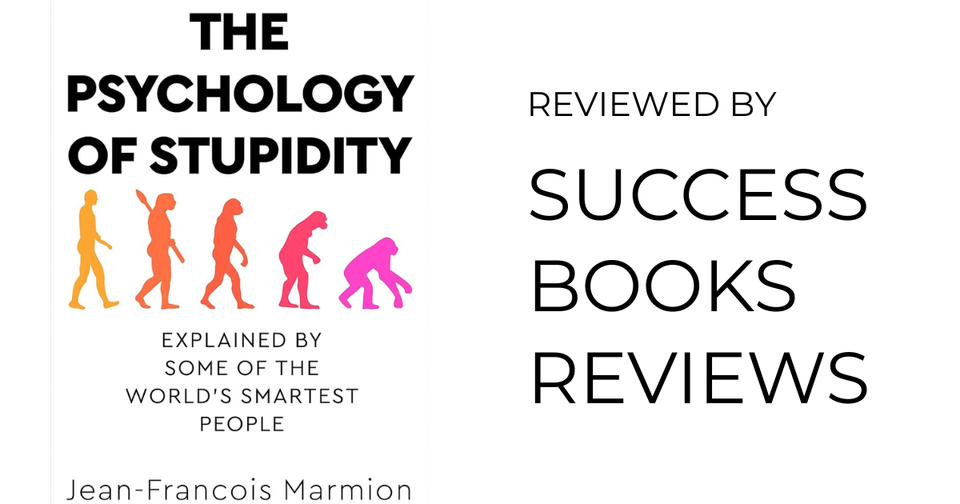
The Psychology of Stupidity brings together psychologists, philosophers, neuroscientists, and other thinkers to examine a deceptively difficult question: why do intelligent people so often think and behave irrationally? Edited by Jean-François Marmion, the collection explores cognitive bias, overconfidence, poor reasoning, misinformation, social influence, and the uncomfortable possibility that stupidity is not something confined to other people.
Rather than offering a single definition or theory, the book approaches human folly from multiple perspectives through essays and interviews. The result is part psychology, part philosophy, and part social commentary, with contributors examining why people cling to mistaken beliefs, how intelligence can coexist with irrationality, and why recognising our own limitations may be an important defence against poor judgment.
Readers interested in the cognitive biases underlying flawed judgment may also enjoy our review of Thinking, Fast and Slow, while The Great Mental Models, Volume 1 offers a constructive counterpart by exploring frameworks designed to improve the way we think.
Who This Book Is For
- Readers interested in psychology, reasoning, and human behaviour
- Anyone curious about why intelligent people can hold irrational beliefs
- Professionals interested in judgment, communication, and decision-making
- Readers of behavioural economics and popular psychology
- Those who enjoy collections offering multiple perspectives rather than a single sustained argument
Key Takeaways
- Intelligence does not guarantee good judgment: Highly intelligent people remain vulnerable to bias, overconfidence, motivated reasoning, and poor decisions.
- Stupidity is difficult to define: What looks foolish in one context may result from incomplete information, social pressure, emotion, or different assumptions.
- We are better at seeing errors in others: Recognising irrationality in someone else is usually easier than identifying the same tendencies in ourselves.
- Confidence can exceed competence: People may hold the strongest opinions precisely when their understanding is limited.
- Beliefs can become part of identity: Once an idea becomes connected to belonging, status, or self-image, evidence alone may have little power to change it.
- Social environments matter: Groups can reinforce poor ideas, reward conformity, and make questionable behaviour appear normal.
- Language can disguise weak thinking: Impressive terminology or confident argument does not necessarily indicate sound reasoning.
- Humility is protective: Awareness of what we do not know can make us more willing to question assumptions and revise beliefs.
- No one is immune: One of the book’s most useful implications is that human folly should be treated as a universal vulnerability rather than a defect found only in other people.
Strengths
- Approaches irrational behaviour from several disciplines and perspectives
- Includes contributions from prominent psychologists and thinkers
- Frequently entertaining despite dealing with serious questions about human judgment
- Encourages readers to examine their own reasoning rather than simply criticise others
- Covers cognitive bias, social influence, language, belief, and misinformation
- Short essays and interviews make the book easy to read in sections
- Complements more systematic books on behavioural psychology and decision-making
- Raises useful questions without pretending that human irrationality has one simple explanation
Weaknesses
- As an edited collection, the quality and depth of individual contributions vary
- The absence of a single sustained argument can make the book feel fragmented
- Some chapters are more philosophical or opinion-based than evidence-driven
- Several contributors approach “stupidity” differently, leaving the central concept deliberately broad but sometimes imprecise
- The provocative language and humour may not appeal to every reader
- Readers familiar with cognitive biases will encounter a number of established ideas
- The collection identifies many forms of poor thinking but provides fewer practical tools for correcting them
Verdict
The Psychology of Stupidity is an entertaining and thought-provoking examination of irrationality, poor judgment, and the many ways human beings can misunderstand both the world and themselves.
Its anthology format is simultaneously its greatest strength and its main limitation. The variety of contributors produces a broad range of perspectives, but it also means the book lacks the coherence and depth of a single-author treatment of decision-making or cognitive bias. Some chapters are more persuasive than others, and the deliberately provocative concept of “stupidity” occasionally encompasses behaviours that might be described more precisely in other terms.
The book is most valuable when it turns the reader’s attention inward. Its underlying lesson is less that the world is full of foolish people than that intelligence offers no automatic protection against faulty reasoning. Recognising that vulnerability - and maintaining some humility about our own beliefs - may itself be one of the more effective ways to think more clearly.
Rating: ★★★½☆ (3.5/5)
Where to Get It
This book is widely available through major online and local booksellers, including Amazon and independent retailers.