Zen Mind, Beginner’s Mind - Shunryu Suzuki (Review)
Summary
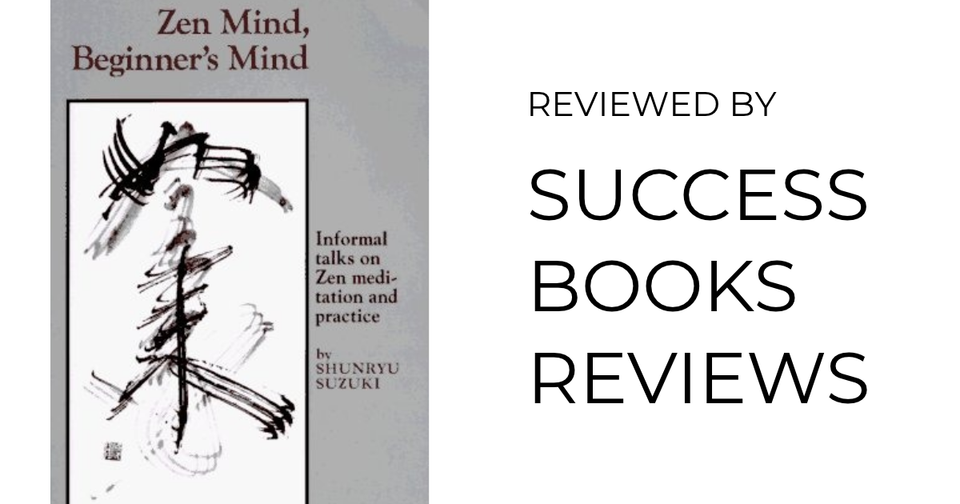
Zen Mind, Beginner’s Mind is one of the most accessible introductions to Zen practice and, at the same time, one of the most difficult to exhaust. Shunryu Suzuki begins with the idea of “beginner’s mind” - approaching experience without the rigidity, assumptions, and certainty that accumulate when we believe we already know.
From meditation posture and breathing, Suzuki moves into deeper questions about effort, attachment, enlightenment, identity, and nonduality. Again and again, he warns against turning Zen itself into another achievement project. Practice is not simply a means of becoming a better or more enlightened version of ourselves; the striving to arrive somewhere else can itself obscure what is already present.
This gives the book a natural connection with the Tao Te Ching, particularly its emphasis on non-forcing and action without excessive self-consciousness. The Wisdom of Insecurity offers another close companion in its questioning of the constant attempt to secure a future state of completion.
Who This Book Is For
- Readers interested in Zen, meditation, and direct experience
- Anyone drawn to non-striving and freedom from excessive self-improvement
- Readers interested in nonduality without elaborate metaphysical theory
- Those who want a practical introduction to meditation
- Anyone questioning fixed ideas about achievement, expertise, and personal progress
Key Takeaways
- Beginner’s mind remains open: Expertise can narrow perception when certainty replaces curiosity.
- Practice is not merely a means to an end: Meditation is not valuable only because it promises some future achievement.
- Striving can become an obstacle: Trying too hard to reach a special state can reinforce the very sense of separation we hope to overcome.
- Form can support freedom: Posture, breathing, and disciplined practice provide structure without needing to become rigid.
- Thoughts need not be eliminated: They can arise and pass without being grasped or turned into identity.
- Self and experience are not completely separate: Suzuki repeatedly points beyond the ordinary division between an observer and what is observed.
- Ordinary life is the practice: Zen is not confined to meditation sessions or unusual spiritual experiences.
- Nothing special is required: The search for extraordinary enlightenment can distract from the immediacy of what is already here.
Strengths
- Makes profound Zen ideas accessible without oversimplifying them
- Combines practical meditation instruction with deeper philosophical insight
- Offers a powerful alternative to achievement-oriented approaches to personal growth
- Particularly strong on non-striving, presence, and beginner’s mind
- Short sections make the book easy to revisit
- Avoids turning enlightenment into another possession or status
- Rewards rereading as understanding develops through practice and experience
Weaknesses
- The conversational structure can sometimes feel loose or repetitive
- Readers looking for a systematic introduction to Buddhist doctrine may need additional material
- Some explanations are deliberately paradoxical and may initially seem unclear
- The emphasis on zazen may be less appealing to readers seeking a purely philosophical treatment
- Ideas such as emptiness and nonduality are introduced experientially rather than explained in detail
Verdict
Zen Mind, Beginner’s Mind is a deceptively simple book. Its language is accessible, but the implications of its teaching reach far beyond meditation technique.
At its heart is a challenge to the usual structure of self-improvement. We normally begin with the assumption that we are incomplete and must acquire something - greater knowledge, greater discipline, greater success, perhaps even enlightenment - before life will finally be as it should be.
Suzuki repeatedly turns that assumption around. Practice matters, effort matters, and discipline matters, but not because they manufacture a perfected future self. Zen practice instead creates the conditions in which grasping, fixed identity, and the constant division between “me” and experience can begin to loosen.
This has an interesting relationship with success. Beginner’s mind does not mean incompetence or lack of skill. It means retaining openness even as skill develops. Non-striving does not mean inactivity. It means acting without turning every action into evidence of personal worth or progress.
The result is a book that quietly undermines the idea that fulfillment lies at the end of an endless project of becoming.
For readers interested in meditation, direct experience, or a less effortful relationship with life, Zen Mind, Beginner’s Mind remains one of the clearest and most enduring places to begin.
Rating: ★★★★★ (5/5)
Where to Get It
This book is widely available through major online and local booksellers, including Amazon and independent retailers.