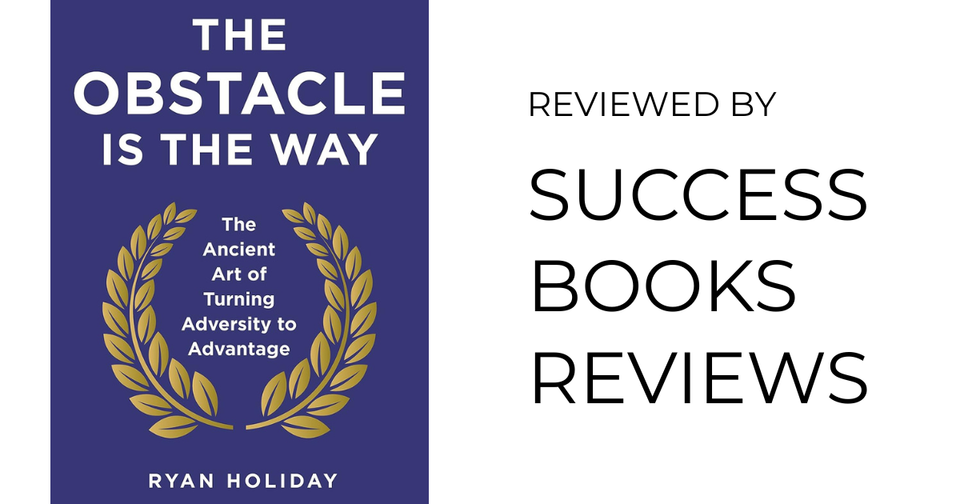
The Obstacle Is the Way - Ryan Holiday (Review)
Summary
In The Obstacle Is the Way, Ryan Holiday draws on Stoic philosophy to argue that difficulties do not simply block progress; approached correctly, they can become part of the path forward. Using examples from history, business, politics, sport, and philosophy, Holiday explores how people have responded effectively to adversity by controlling their perceptions, taking purposeful action, and developing the inner strength to endure what cannot immediately be changed.
The book is organised around three broad disciplines: perception, action, and will. Together they form a practical framework for dealing with setbacks without denying their reality or becoming paralysed by frustration. Holiday’s central argument is not that every obstacle is desirable, but that our response to difficulty remains one of the areas in which we retain meaningful control.
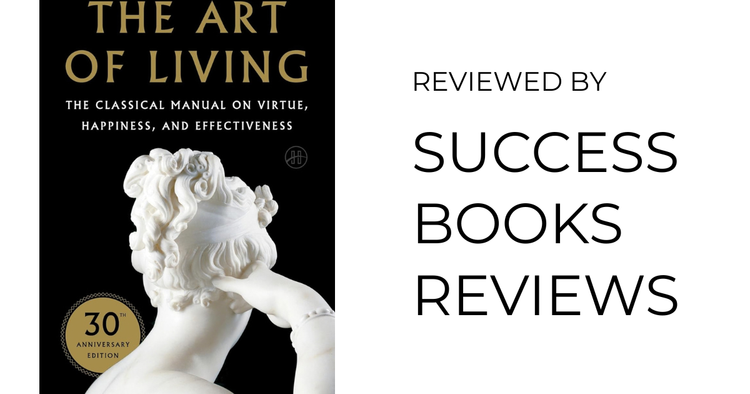
Readers interested in the Stoic foundations behind these ideas may also enjoy our review of The Art of Living, while Stillness Is the Key offers another Ryan Holiday perspective on developing clarity and composure in demanding circumstances.
Who This Book Is For
- Readers dealing with setbacks, uncertainty, or difficult circumstances
- Leaders and professionals responsible for acting under pressure
- Entrepreneurs and business owners facing repeated obstacles
- Readers interested in practical applications of Stoic philosophy
- Anyone seeking a more constructive response to frustration and adversity
- Readers who prefer philosophy illustrated through historical examples rather than abstract theory
Key Takeaways
- Perception shapes the problem: We may not control events, but we can often influence how we interpret and respond to them.
- Separate facts from reactions: Fear, frustration, and assumptions can make an obstacle appear more overwhelming than the underlying situation requires.
- Action creates momentum: Progress often depends on taking practical steps rather than waiting for ideal conditions.
- Persistence should be purposeful: Repeated effort matters, but effective action may require changing tactics rather than simply trying harder.
- Use obstacles as information: Difficulties can expose weaknesses, mistaken assumptions, and opportunities that were previously hidden.
- Control what is controllable: Energy spent resisting circumstances outside our influence can reduce our ability to act where influence is possible.
- The will sustains action: Patience, endurance, acceptance, and perspective become especially important when a problem cannot be quickly solved.
- Preparation matters: Developing resilience before a crisis makes it easier to respond effectively when circumstances become difficult.
- Adversity can develop capability: Challenges can strengthen judgment, discipline, and resourcefulness when they are approached constructively.
Strengths
- Presents Stoic ideas in highly accessible modern language
- Offers a clear framework built around perception, action, and will
- Uses memorable historical examples to illustrate abstract principles
- Particularly relevant to leadership, entrepreneurship, and performance
- Encourages responsibility without pretending that circumstances are always controllable
- Emphasises practical response rather than passive positive thinking
- Short chapters make the book easy to revisit
- Provides an accessible bridge between classical Stoicism and modern personal development
Weaknesses
- Historical examples are sometimes simplified to support the book’s central message
- The repeated emphasis on transforming obstacles into opportunities can occasionally make the argument feel overly universal
- Some difficulties cannot realistically be converted into advantages, even if our response to them can still be improved
- Readers already familiar with Stoicism may find many of the underlying principles familiar
- The large number of short examples sometimes comes at the expense of deeper analysis
- The motivational tone may appeal less to readers looking for a more scholarly treatment of Stoic philosophy
- Its focus on agency can understate the extent to which circumstances may genuinely restrict available choices
Verdict
The Obstacle Is the Way is one of Ryan Holiday’s clearest and most practical applications of Stoic philosophy. Its strength lies in a simple but demanding idea: when circumstances become difficult, our most useful question is often not why the obstacle exists, but what remains within our control and what constructive action is still possible.
The book is at its best when it encourages readers to separate events from their emotional reactions, act deliberately, and develop the endurance needed for problems that cannot be solved immediately. Its historical examples can occasionally simplify complex events, and the idea that obstacles can become opportunities should not be interpreted too literally in every circumstance.
Nevertheless, the framework of perception, action, and will is memorable and widely applicable. For readers facing uncertainty, professional setbacks, or personal challenges, The Obstacle Is the Way offers a practical introduction to Stoic resilience without requiring prior knowledge of philosophy.
Rating: ★★★★☆ (4/5)
Where to Get It
This book is widely available through major online and local booksellers, including Amazon and independent retailers.