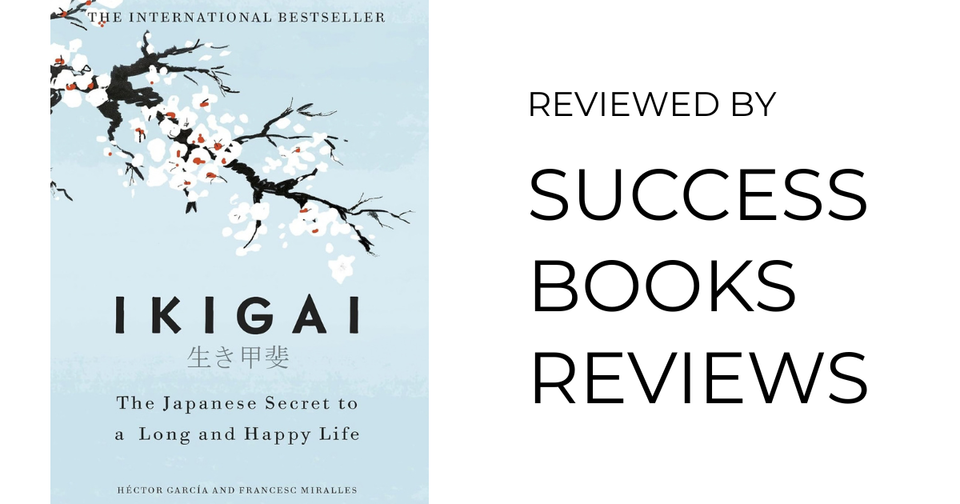
Ikigai - Héctor García and Francesc Miralles (Review)
Summary
In Ikigai: The Japanese Secret to a Long and Happy Life, Héctor García and Francesc Miralles explore the Japanese concept of ikigai - broadly understood as a reason for living or something that gives life meaning and direction. The authors connect this idea with longevity, purposeful activity, social connection, healthy habits, and the ability to remain engaged with life as we grow older.
Drawing particularly on observations and interviews from Okinawa, the book moves beyond purpose alone to consider diet, exercise, community, resilience, flow, and everyday routines. Its central message is that a satisfying life may depend less on dramatic achievements than on having meaningful reasons to get up each morning and continuing to participate actively in the world around us.
Readers interested in exploring meaning more deeply may also enjoy our review of Man’s Search for Ultimate Meaning, while The Pathless Path offers a complementary examination of purpose, work, and the assumptions that shape the lives we choose.
Who This Book Is For
- Readers interested in purpose, meaning, and personal fulfilment
- Anyone seeking a gentle introduction to Japanese approaches to living well
- Readers interested in longevity and healthy ageing
- People reconsidering the role of work and activity later in life
- Those interested in the connections between community, habits, wellbeing, and purpose
- Readers who prefer accessible ideas and practical observations to dense psychological or philosophical analysis
Key Takeaways
- Purpose matters: Having reasons to engage with life can provide direction, motivation, and a sense of meaning.
- Stay active: Continuing to participate in meaningful work, hobbies, relationships, and community can support a satisfying life.
- Small pleasures matter: Fulfilment does not necessarily depend on extraordinary achievements; everyday activities can provide genuine meaning.
- Relationships support wellbeing: Strong social connections and a sense of belonging are recurring features of the lifestyles described in the book.
- Move naturally: Regular everyday physical activity can be more sustainable than relying solely on intense exercise programs.
- Avoid constant excess: Moderation in eating and other habits is presented as part of a healthier approach to life.
- Find opportunities for flow: Deep engagement in activities that challenge and absorb us can make work and leisure more rewarding.
- Resilience supports longevity: The ability to adapt to difficulty without losing direction is an important part of maintaining purpose.
- Purpose can evolve: Ikigai need not be one grand lifelong mission; it can arise from relationships, interests, contribution, routine, or work.
Strengths
- Accessible and easy to read
- Introduces useful ideas about purpose without requiring a background in philosophy or psychology
- Connects meaning with practical aspects of everyday life
- Encourages continued activity and engagement rather than viewing ageing primarily as withdrawal
- Gives appropriate importance to relationships and community
- Offers a positive alternative to highly achievement-focused approaches to personal development
- Short chapters and practical observations make it easy to revisit
- Its emphasis on ordinary sources of meaning can be reassuring for readers who feel pressured to discover a single grand purpose
Weaknesses
- The book sometimes moves too easily from observations about long-lived communities to broader conclusions about longevity
- Scientific evidence and cultural observations are occasionally blended without clearly distinguishing their strength
- Its treatment of ikigai simplifies a complex Japanese concept for an international self-development audience
- Some advice - such as staying active, eating moderately, maintaining friendships, and exercising regularly - is useful but already familiar
- Readers seeking a rigorous examination of purpose or longevity may find the treatment relatively light
- Several themes overlap and can become repetitive
- The attractive simplicity of the message can make complex questions about health, ageing, and fulfilment appear easier to resolve than they really are
Verdict
Ikigai is a warm and accessible exploration of purpose, longevity, and the everyday habits that can contribute to a satisfying life. Its appeal lies less in introducing radically new ideas than in bringing familiar principles - meaningful activity, moderation, friendship, movement, resilience, and engagement - together around the memorable concept of having a reason to get up in the morning.
The book should not be treated as a scientific formula for longevity, and its presentation of ikigai inevitably simplifies a concept with deeper cultural roots. Readers looking for rigorous research or a detailed philosophical treatment of meaning will find stronger material elsewhere.
Nevertheless, Ikigai succeeds as a gentle invitation to examine what makes everyday life worth participating in. Its most useful message may be that purpose does not have to be grand, lucrative, or impressive. It can be found in the activities, people, responsibilities, and interests that give ordinary days significance.
Rating: ★★★★☆ (4/5)
Where to Get It
This book is widely available through major online and local booksellers, including Amazon and independent retailers.