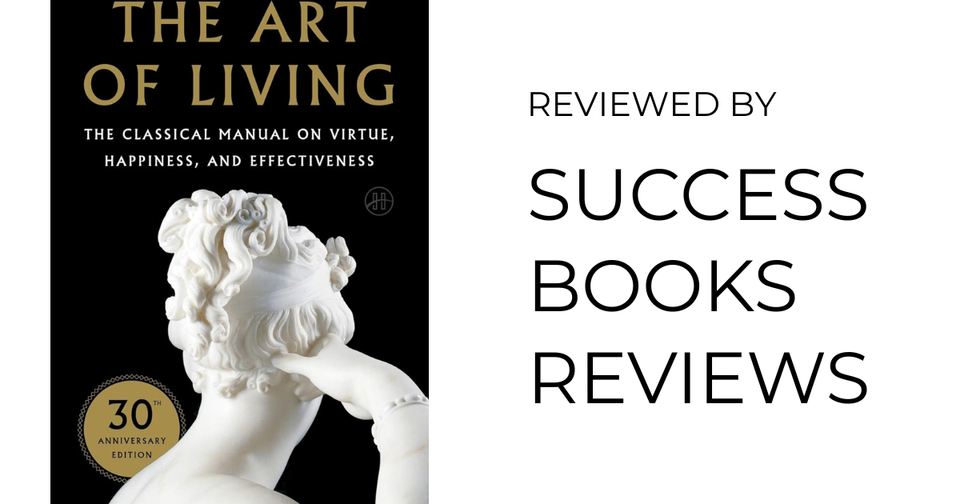
The Art of Living - Epictetus / Sharon Lebell (Review)
Summary
The Art of Living: The Classical Manual on Virtue, Happiness, and Effectiveness presents the teachings of the Stoic philosopher Epictetus in accessible contemporary language. Interpreted by Sharon Lebell, the book distils Stoic ideas about responsibility, self-control, adversity, desire, character, and the distinction between what we can and cannot control.
Rather than treating philosophy as an abstract intellectual exercise, The Art of Living is concerned with how to live well in ordinary circumstances. Its advice repeatedly directs attention away from external events, status, possessions, and other people’s opinions, and towards our own judgments, choices, and conduct.
Readers who want to encounter Epictetus in greater depth may also enjoy our review of Discourses of Epictetus, while Meditations by Marcus Aurelius offers another highly personal and practical expression of Stoic philosophy.
Who This Book Is For
- Readers looking for an accessible introduction to Stoicism
- Anyone interested in resilience, self-discipline, and emotional perspective
- Readers dealing with circumstances they cannot easily change
- Leaders and professionals interested in character and personal responsibility
- Those who prefer short philosophical reflections to lengthy theoretical arguments
- Readers interested in applying ancient philosophy to modern life
Key Takeaways
- Focus on what you can control: Our judgments, choices, and actions are ours to influence; many external events are not.
- Our response matters more than circumstances: Events themselves do not fully determine our experience - our interpretation of them matters greatly.
- Desire can create unnecessary suffering: Becoming attached to outcomes outside our control makes tranquillity more difficult.
- Character matters more than reputation: Living according to sound principles is more important than winning approval or appearing successful.
- Accept reality before acting: Resisting facts we cannot change consumes energy that could be directed towards an effective response.
- Freedom begins internally: Dependence on status, possessions, praise, or favourable circumstances can make us less psychologically independent.
- Philosophy should be practised: Understanding an idea intellectually has limited value unless it changes how we behave.
- Difficulties reveal character: Adversity provides an opportunity to practise patience, courage, judgment, and self-command.
- Examine your own conduct first: Stoicism places greater emphasis on improving ourselves than on controlling or condemning others.
Strengths
- Makes ancient Stoic ideas highly accessible to modern readers
- Short sections make the book easy to revisit and reflect upon
- Offers practical principles that remain relevant to everyday problems
- Strong emphasis on personal responsibility without requiring control over external events
- Particularly useful for readers encountering Epictetus for the first time
- Encourages reflection on status, approval, possessions, and ambition
- Provides a useful bridge between classical philosophy and contemporary personal development
- Contains ideas that can be applied immediately without specialist knowledge of philosophy
Weaknesses
- Sharon Lebell’s contemporary interpretation is not the best choice for readers seeking a close scholarly translation of Epictetus
- Modernised language can sometimes obscure the historical and philosophical context of the original teachings
- The short, aphoristic structure means complex Stoic ideas are sometimes presented without extended argument
- Some advice may initially appear overly accepting of circumstances unless read alongside the Stoic emphasis on responsible action
- Themes such as control, desire, character, and acceptance recur frequently
- Readers already familiar with Epictetus may find relatively little that is conceptually new
- Those wanting a deeper understanding of Stoic philosophy will eventually need to move beyond this brief interpretation to works such as the Discourses
Verdict
The Art of Living succeeds because it makes Epictetus immediately usable. Its lessons about control, responsibility, desire, adversity, and character require little knowledge of ancient philosophy, yet they address problems that remain recognisable in modern life.
Sharon Lebell’s modern interpretation is also the book’s principal limitation. Readers wanting the precise language, arguments, and historical texture of Epictetus will be better served by fuller translations of the Discourses and Enchiridion. But accessibility is clearly the purpose here, and on those terms the book works extremely well.
Its enduring message is simple but demanding: we cannot arrange the world to suit ourselves, but we can develop greater control over how we judge events and how we choose to respond. For readers seeking a concise and practical entry point into Stoicism, The Art of Living is an excellent place to begin.
Rating: ★★★★½☆ (4.5/5)
Where to Get It
This book is widely available through major online and local booksellers, including Amazon and independent retailers.