The Comfort Crisis - Michael Easter (Review)
Summary
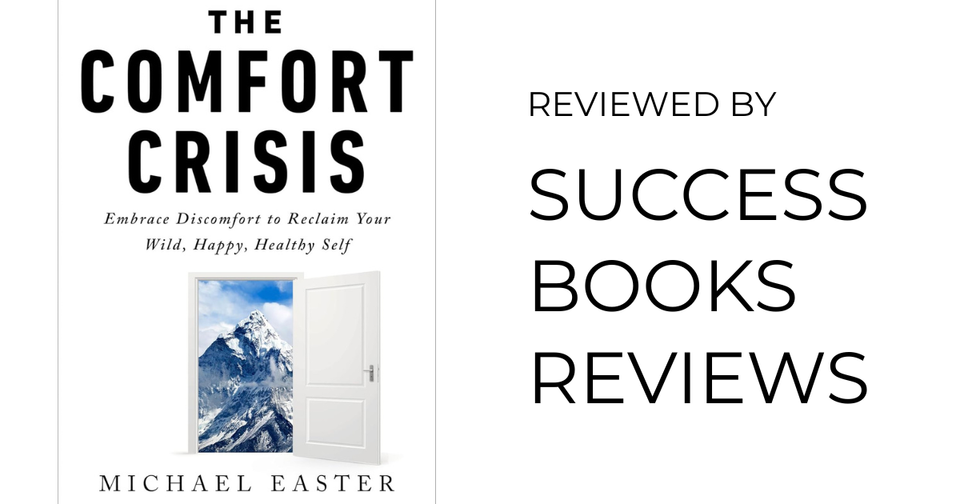
In The Comfort Crisis, Michael Easter examines whether modern convenience has removed many of the physical and psychological challenges humans once faced as part of everyday life. Drawing on scientific research, interviews with experts, and his own demanding wilderness experience, Easter explores how deliberately engaging with discomfort may strengthen resilience, sharpen perspective, and improve our relationship with challenge.
Rather than advocating constant hardship, the book argues for a more deliberate balance between comfort and difficulty. Readers interested in more extreme approaches to mental resilience may also enjoy our review of Can’t Hurt Me, while Four Thousand Weeks offers a complementary challenge to modern assumptions about productivity, control, and how we choose to live.
Who This Book Is For
- Readers interested in resilience, personal growth, and human performance
- Anyone curious about the effects of modern comfort and convenience
- Professionals seeking a broader perspective on stress and challenge
- Readers who enjoy research combined with personal adventure and storytelling
Key Takeaways
- Comfort has consequences: Constant convenience may reduce our tolerance for difficulty and uncertainty.
- Discomfort can be useful: Carefully chosen challenges can provide opportunities to develop resilience and perspective.
- Modern life changes behaviour: Convenience, technology, and abundance can influence habits in ways we rarely notice.
- Nature creates perspective: Time away from familiar routines and distractions can encourage reflection and awareness.
- Challenge should be deliberate: The goal is not suffering for its own sake, but engaging thoughtfully with meaningful difficulty.
Strengths
- Engaging combination of research, interviews, and personal narrative
- Offers a thought-provoking critique of modern convenience
- Makes ideas about resilience accessible without relying entirely on motivational rhetoric
- Strong storytelling gives abstract concepts practical context
Weaknesses
- The author's wilderness experience occupies a substantial part of the narrative and may not appeal to all readers
- Some broader conclusions are drawn from research and examples that do not always establish clear cause and effect
- Certain challenges described in the book may be difficult or impractical for many readers to replicate
- Readers seeking a structured, step-by-step framework may find the approach relatively loose
Verdict
An engaging and thought-provoking exploration of our relationship with comfort. The Comfort Crisis makes a persuasive case for questioning constant convenience and engaging more deliberately with challenge, although some of its broader claims deserve a degree of caution. Its strongest contribution is not a prescription for extreme hardship, but an invitation to reconsider whether a life designed to eliminate every discomfort is necessarily a better one.
Rating: ★★★★☆ (4/5)
Where to Get It
This book is widely available through major online and local booksellers.