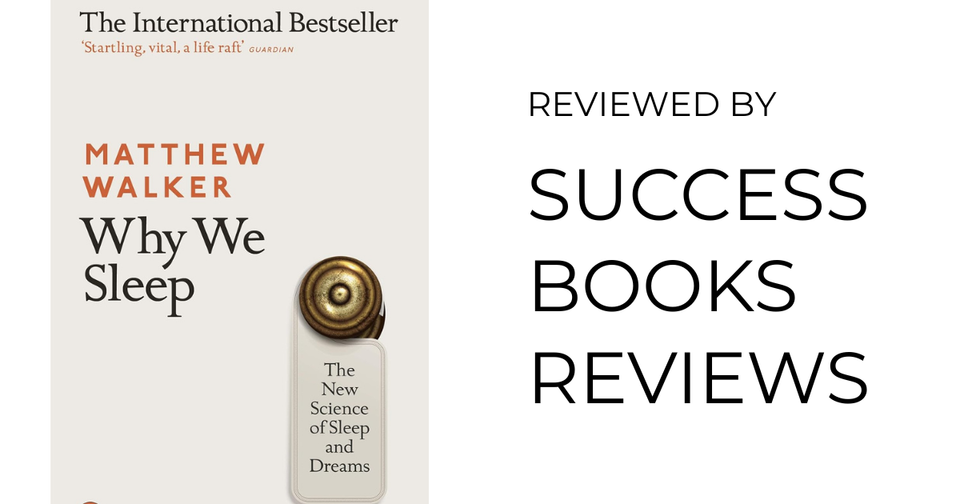
Why We Sleep - Matthew Walker (Review)
Summary
In Why We Sleep: Unlocking the Power of Sleep and Dreams, neuroscientist Matthew Walker explores the role sleep plays in physical health, memory, learning, emotional regulation, performance, and overall wellbeing. Drawing on research from neuroscience, psychology, and medicine, he argues that sleep is not simply a period of inactivity, but a fundamental biological process with wide-ranging effects on how we think, feel, and function.
Walker examines what happens during different stages of sleep, why dreaming matters, how modern lifestyles can interfere with healthy sleep, and what may happen when insufficient sleep becomes habitual. The book also challenges the idea that sleeping less is a mark of productivity or ambition.
Readers interested in performance and recovery may also enjoy our review of Do Hard Things, while Four Thousand Weeks offers a complementary challenge to modern assumptions about productivity, busyness, and how we use our limited time.
Who This Book Is For
- Readers interested in sleep, health, psychology, and neuroscience
- Professionals concerned with performance, concentration, and decision-making
- Anyone trying to understand how sleep affects memory, mood, and daily functioning
- Readers questioning whether sacrificing sleep for productivity is worthwhile
- Those interested in practical ways to improve sleep habits
Key Takeaways
- Sleep is biologically essential: It plays an important role in memory, learning, emotional regulation, physical recovery, and many other bodily processes.
- Sleep has distinct stages: Different phases of sleep appear to support different functions, including memory consolidation and emotional processing.
- Sleep deprivation has consequences: Even relatively modest sleep loss can affect attention, reaction time, judgment, mood, and performance.
- Dreaming has a purpose: REM sleep appears to play a role in emotional processing, creativity, and the integration of memories.
- Regularity matters: Consistent sleep and wake times can support healthier sleep patterns.
- Modern habits can interfere with sleep: Artificial light, screens, caffeine, alcohol, irregular schedules, and late-night stimulation may all affect sleep quality.
- Productivity and sleep are connected: Sacrificing sleep in order to work longer can undermine the cognitive abilities that productive work depends on.
- Sleep should not be treated as optional: The book’s broader message is that sleep deserves to be treated as a core part of health rather than leftover time at the end of the day.
Strengths
- Makes complex sleep science accessible to a general audience
- Covers a wide range of topics, from memory and dreams to performance and health
- Strongly challenges cultural assumptions that glorify sleep deprivation
- Provides memorable examples that make scientific concepts easier to understand
- Encourages readers to take sleep more seriously as part of overall wellbeing
- Particularly relevant to professionals, students, athletes, and people working long hours
- Combines explanation with practical implications for everyday life
Weaknesses
- Some conclusions are presented more confidently than the underlying evidence may justify
- The book sometimes moves quickly from research findings to broad claims about long-term health outcomes
- Its strong advocacy for sleep can occasionally make the tone feel more alarmist than necessary
- Readers looking for a tightly structured practical sleep program may find much of the book explanatory rather than instructional
- Some examples and research claims have attracted criticism over interpretation, precision, or presentation
- The sheer number of negative consequences associated with poor sleep can become repetitive
Verdict
Why We Sleep succeeds in making sleep feel important, interesting, and worthy of serious attention. Matthew Walker presents a broad and engaging account of how sleep interacts with memory, learning, mood, physical recovery, performance, and health, while challenging the widespread assumption that sleeping less is a sign of discipline or productivity.
The book is most effective when explaining the basic mechanisms and functions of sleep and showing how strongly sleep is connected with everyday performance. Some of its broader claims deserve a degree of caution, particularly where complex research is distilled into striking conclusions.
Even with those reservations, Why We Sleep remains an accessible and thought-provoking introduction to sleep science and a persuasive reminder that consistently neglecting sleep can come at a significant cost.
Rating: ★★★★☆ (4/5)
Where to Get It
This book is widely available through major online and local booksellers.